The emotions that cost traders money
| Emotion | How it shows up in trades | A practical counter |
|---|---|---|
| Fear | Skipping valid setups, exiting winners early, stops too tight | Smaller size, so the loss at the stop doesn’t scare you |
| Greed | Moving targets further, adding to winners without a plan, oversizing | Exits decided before entry; a trailing rule instead of hope |
| FOMO | Chasing a candle that already ran, entering without a setup | “No setup, no trade” — a missed move is not a loss |
| Revenge | A bigger trade right after a loss | Cool-off after losses and a daily loss limit — see revenge trading |
| Overconfidence | Bigger size and looser rules after a winning streak | Same risk per trade in good and bad weeks |
| Loss aversion | Holding losers and hoping, cutting winners quickly | A hard stop at the broker; review average win vs average loss in R |
| Boredom | Trading quiet markets “to do something” | A trading window and a maximum number of trades — see overtrading |
Process over outcome
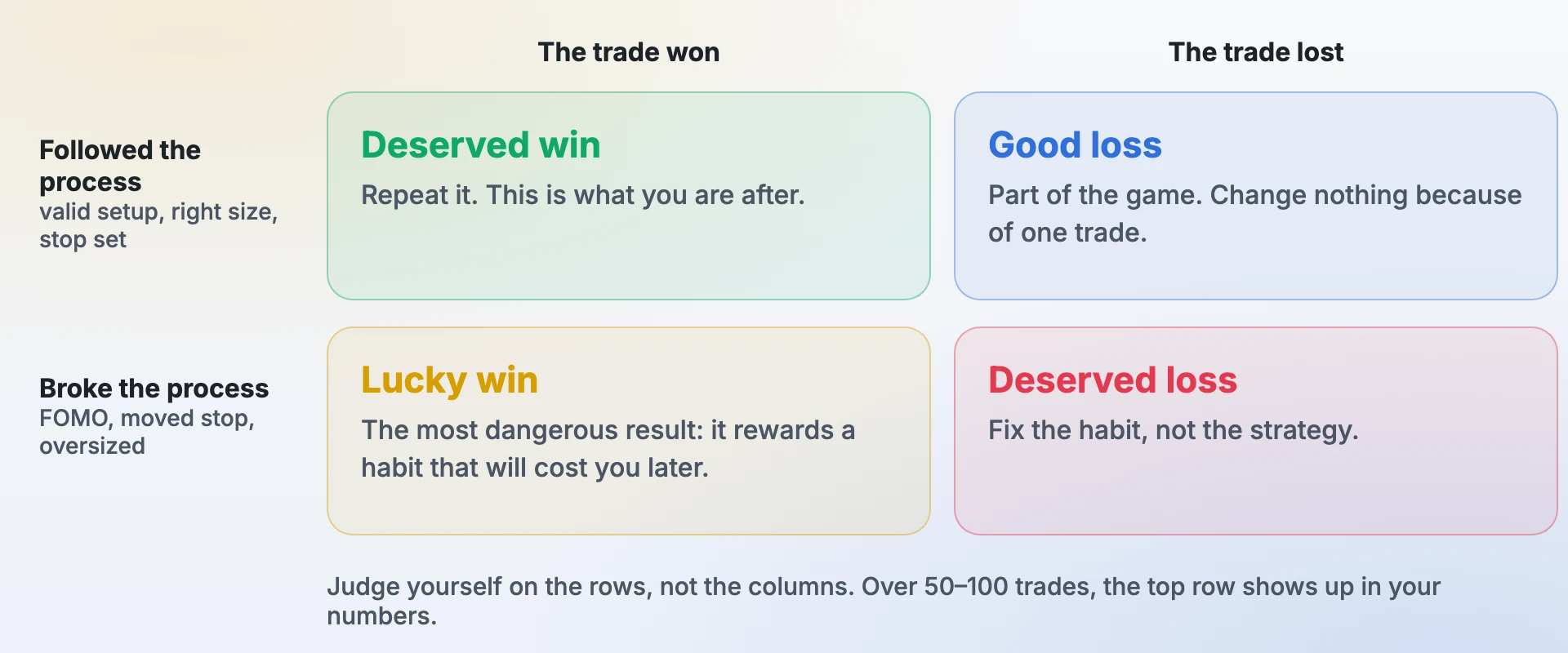
A single trade’s result is mostly noise: good trades lose and bad trades win. If you judge yourself trade by trade, emotions follow every swing. Judge the process instead — did you take a valid setup, size it correctly, set the stop and follow the exit rule? Over 50–100 trades, a good process shows up in the numbers; a single loss says almost nothing.
Routines that keep emotions out
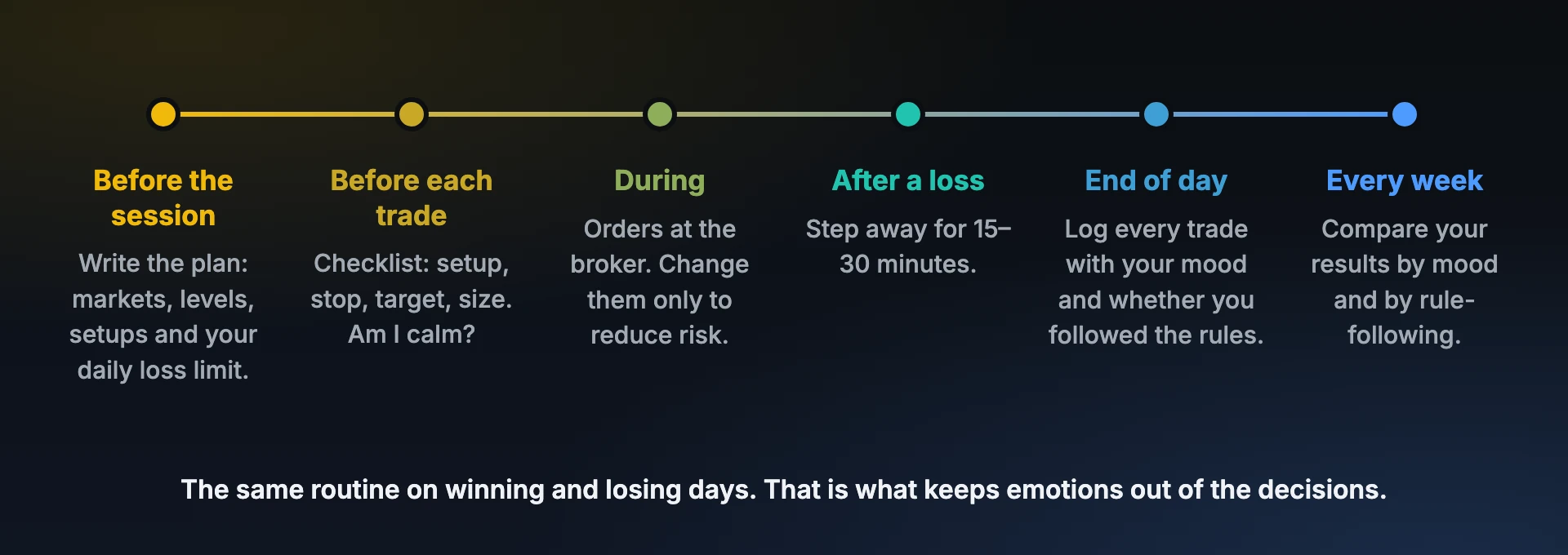
- Before the session: write the plan — markets, levels, setups you are waiting for, and your daily loss limit.
- Before each trade: a short checklist — setup, stop, target, size, “am I calm?”.
- During: orders at the broker, not in your head. No changes except to reduce risk.
- After a loss: step away for 15–30 minutes.
- End of day: log every trade with your mood and whether you followed the rules.
- Weekly: compare your results by mood and by rule-following. Seeing that “FOMO” trades average −0.6R does more than any motivation.
A two-minute check before you trade
- Sleep and health: tired or ill means half size or no trading.
- Yesterday: a big loss or a big win yesterday both raise the risk of breaking rules today.
- Mood, 1 to 5: write the number. At 1 or 2, watch only.
- Outside pressure: money you need this week, a fight at home, a deadline. Pressure becomes oversizing.
Log the answers with the day’s trades. After a month you can see whether your low-mood days really cost you, in R.
Position size is a psychology tool
If a normal loss makes your heart race, your size is too big — and fear will drive your decisions. Many traders find their discipline improves simply by cutting risk per trade until a stop-out feels routine. Use a position size calculator so size never depends on mood.
Measure it
Psychology becomes manageable when it becomes data. In Profit Prism Journal you tag each trade’s mood, tick a daily rules checklist, and see your win rate and R by mood, your discipline streak, and “discipline vs results” — how your R compares on days you followed every rule versus days you didn’t.
Frequently asked questions
What is trading psychology?
Trading psychology is how emotions such as fear, greed, FOMO and frustration influence trading decisions — entries, position size, exits and whether rules are followed.
How can I control emotions while trading?
Reduce the emotional load: trade a size where a loss feels routine, decide stops and targets before entering, use a checklist, step away after losses, stop at a daily loss limit, and review your trades by mood each week.
What is FOMO in trading?
Fear of missing out — entering a trade because the price is moving fast, not because your setup appeared. FOMO entries are usually late, with poor risk:reward.
Why do I exit winning trades too early?
Usually fear of giving back profit, made worse by oversized positions. Decide the exit rule before entering — a target or a trailing stop — and keep position size small enough to follow it.
Does journaling help trading psychology?
Yes. Recording your mood and whether you followed your rules turns vague feelings into numbers, such as the average R of trades taken in FOMO, which makes the behaviour easier to change.
See your own numbers
Profit Prism Journal measures every trade in R and shows your win rate, RR, leaks and loss limits — for crypto, forex, stocks and F&O. Try it free for 7 days, no card.
Start the free trialFor education only. Not investment advice. Trading involves substantial risk of loss.